
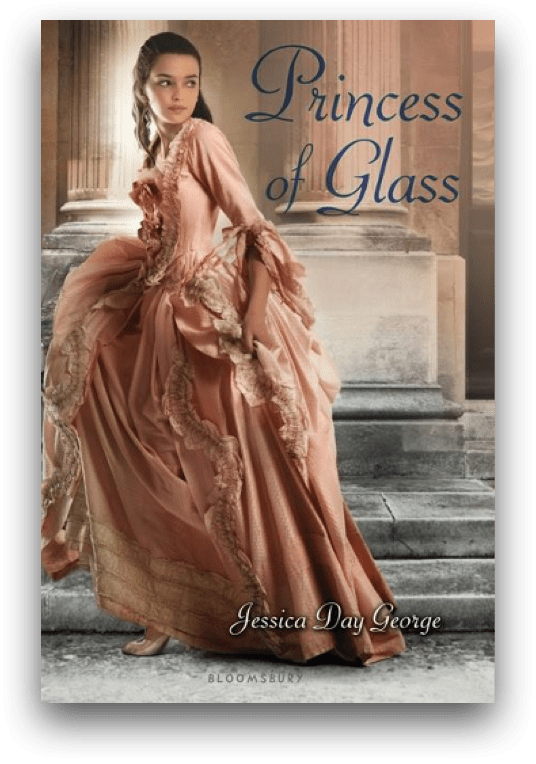
The Princesses of Westfalin, tome 2, Jessica Day George

Présentation
The exciting sequel to Princess of the Midnight Ball.
Hoping to escape the troubles in her kingdom, Princess Poppy reluctantly agrees to take part in a royal exchange program, whereby young princes and princesses travel to each other’s countries in the name of better political alliances—and potential marriages. It’s got the makings of a fairy tale—until a hapless servant named Ellen is tricked by a vengeful fairy godmother into competing with Poppy for the eligible prince. Ballgowns, cinders, and enchanted glass slippers fly in this romantic and action-packed happily-ever-after quest from an author with a flair for embroidering tales in her own delightful way.
14 -1 = 13/20
Chronicle
Cendrillon, Cendrillon, qui n’a jamais rêvé d’un conte de fée à la Cendrillon ? Le plus connu et le plus populaire de l’univers ! Jessica Day George a-t-elle su relever l’imposant défi que cela représentait ? Hum, oui et non. Plus non que oui, à vrai dire.
Pourtant, cette réécriture est beaucoup plus originale que celle du tome 1. Ici, l’autrice ne s’est pas seulement contentée de RÉECRIRE le conte, elle l’a RÉINVENTÉ. J’ai aimé que ce soit non pas les deux vilaines sœurs et leur mère (respectivement Poppy, Marianne et Lady Margaret) les méchantes mais Cendrillon et sa marraine la sorcière. Rajouter à cela qu’il n’y a pas la fameuse pantoufle de verre comme dans le conte originel
voir le spoil
mais littéralement Ellen/Cendrillon qui se transforme en verre !J’ai trouvé les idées géniales, enfin quelque chose qui sort un peu du commun.
Il y avait tout pour que la revisite soit un succès mais elle m’a paradoxalement moins emballé que la première alors que celle-ci était moins bien originale. Il y a deux grandes raisons à cela :
Tout d’abord, le rythme est archi lent ! On s’endormirait presque. Au tout début, ça allait mais arrivée à presque un tiers du livre, je me demandais quand l’histoire allait débuter. Les 80 premières pages, c’est le néant total, il ne se passe rien. J’avais du mal à rester dedans. Ensuite, à partir du moment où on entre pleinement dans le conte de Cendrillon, ça redevient intéressant. C’est fluide et facile à lire. Mais ça ne dure pas longtemps, pauvres de nous.
Et si ça ne dure pas longtemps, c’est à cause de la deuxième grande raison (reproche que j’ai déjà formulé au premier tome) : c’est trop superficiel ! En me lançant dans cette trilo, je recherchais justement quelque chose du style, une histoire de conte de fées quoi, tout simplement. Mais là, c’est TROOOOOOP ! J’avais l’impression de lire le script des dessins animés Barbie qui passe sur Gulli là, c’est quoi ça ?!
L’autrice n’a fait aucun effort. Un conte de fée, soit, mais un conte de fée riche, complexe, surprenant, qui nous fait réfléchir et rêver à la fois, c’est ça qu’on veut nous !
Pareil pour les personnages, ils sont insignifiants, des coquilles vides. Impossible de s’attacher à eux, ils ne m’ont fait ni chaud ni froid. Sauf peut-être Ellen mais pas dans le bon sens. Elle est super chiante, elle ne fait aucun effort, elle avait un coté peste au début, limite mal élevée qui la rendait aussi immature qu’une gamine pourrie gâtée. Je peux comprendre qu’elle soit meurtrie par ce qui est arrivé à sa famille, c’est pas non plus une raison pour déverser sa colère et sa frustration sur les autres (surtout lorsque ceux-ci ne cherchent qu’à l’aider). Ce comportement est insupportable. Le pire est à la fin quand l’autrice l’a fait passer de cette fille chiante et bizarre à la grande victime de l’histoire. D’un coup, Ellen se transforme en une adorable jeune fille manipulée par the Corley. Il me semble qu’elle n’a pas eu besoin de sa marraine pour manquer de respect à Lady Margaret, par exemple. Ce changement de personnalité est maladroit mais il le fallait bien car que ne serait un conte de fée sans sa merveilleuse et heureuse petite fin ?
La fin… Seigneur. Du foutage de gueule. S’il suffisait de ça pour écrire la fin d’un livre, on serait tous écrivains. Le niveau est tellement bas, c’est très grave. Vient même de me traverser l’esprit là-maintenant de mettre un -1 symbolique pour cette fin nullissime. Ok, du coup, ça fait 13. Je trouve ça abusé de finir de cette façon, l’autrice n’a donc rien trouvé pour conclure ? Le dénouement de l’intrigue est d’une médiocrité telle que j’en ai rarement vue.
Et parlons maintenant du dernier chapitre après le dénouement. On a le droit à une scène de fin où tt le monde se retrouve, se tombe dans les bras, fait des déclarations d’amour et des demandes en mariage et s’embrasse. Je sais que c’est un conte de fée et que c’est toujours « tout est bien qui finit bien » mais là, c’est TROP. C’est juste TROP. Une grosse blague.
Si tant est que « tout est bien qui finit bien », ça passe encore, mais la niaiserie et la mièvrerie qui suinte de chaque parcelle au micromètre près des pages de ce livre, c’est obligatoire ? On ne peut pas faire plus puéril que ça. Plus niais, tu meurs. Mon Dieu, mais qu’est-ce que c’est ?!
Ce deuxième tome fait beaucoup trop enfantin pour moi. Et encore, même les films de Barbie que je regardais quand j’avais sept ans ne faisaient pas aussi nunuches. Je compte sur le dernier volet pour remonter la barre. Je dirais toujours oui à des contes de fées mais pitié, qu’ils soient un peu plus élaborés !
Les extraits que j’ai retenus

“I’m not even sure that I was invited,” Poppy said, looking for an excuse to get out of the royal celebrations once and for all. “If it was for the Seadown family… Invitations have come specifically for me in the past.” She smiled inwardly, thinking that she had hit on the perfect answer.
“Actually, what it said was that ‘every eligible young lady was invited along with her guardians,’” Lady Margaret gave Poppy a triumphant smile. “You happen to be an eligible young lady.”
“And so am I,” Ellen said.
They turned to look at her.
“I’m an eligible young lady,” she said louder. She thrust her chin out. “And you know that I wasn’t born a maid.”
Poppy gave a low whistle. She had to admire Ellen’s bravery. Sullenness was one thing, but coming right out with her grievance in front of her employer was quite another.
“Cinders, cinders, smoke and water, take me to visit my dear godmother!”
The fireplace expanded, stretching like a waking cat until it was a tall doorway. Ellen scrambled to her feet and hiked her skirts high to step over the fender, into the mucky remains of her fire, and then on into the dark corridor beyond.
Her heart was hammering loudly in her throat, but more with excitement than fear. At the end of the corridor was a bright light, and she could hear music.
After eight years of neglect, she had finally found someone who wanted her.
“Whatever do you think you’re doing?” Poppy found it hard to berate the girl in a whisper, but she made do. “The Seadowns take you in, give you a job when no one else would, offer you gowns to attend the royal balls, and you – you –” She threw her hands in the air and then tried again. “You still break everything you touch, scorch the ironing – and why was there sand in my pillowcase last night? Is it really that hard to be a maid?” She stared at Ellen by the light of the candles she had lit in her room to chase away the shadows of the nightmare.
Ellen gazed down at the filthy toes of her shoes, peeping out from her sooty hem. When she at last looked at Poppy, instead of being ashamed or even sulky, her face was blazing with rage. Poppy took a step back in shock.
“Yes!” Ellen spat the word at Poppy. “Yes, it is that hard to be a maid, as you would know if you had ever lifted your little finger to do one simple thing for yourself, Your Highness!’ She sneered as she said the other girl’s title. “Do you know how to make up a featherbed? To iron lace? To serve milady’s tea just so?” Ellen was panting with the force of her emotions.
“N-no,” Poppy stammered, still taken aback. “Well, I do know how to serve tea without breaking the –,” she began, but Ellen interrupted her.
“And do you know what’s it like to feel a tray of heirloom china leap from your hands and crash to the floor? To feel the iron suddenly go red hot even though it’s not on the stove, and smell linen scorching? To find towels that you just folded in disarray even though no one has touched them? There is something horribly wrong with me. I wasn’t meant to be a maid. And I just. Can’t. Do it.”
She lifted the pitcher and poured water into the basin. As it ran into the white porcelain, the water turned green. Ellen nearly dropped the heavy pitcher, only just managing to put it back on the table in time. From the glowing green water, she heard a kindly voice speaking.
“Poor dear! All alone in the world, aren’t you?”
Ellen whirled around, but the door was still closed and there wasn’t another soul in the room. “Who said that?” Her voice came out thin and shaky.
“They call me the Corley,” the voice said. “But I am also your godmother, my dear. Pour more water into the pitcher, that I may see you.”
“What?”
“When you pour water, I can see you,” the voice said, still patient and soft. It was a plump voice, a gentle voice, the voice of a grandmother in a lace cap and woolen shawl. “Pour the water, dear Eleanora, and let us talk.”
Still shaking, Ellen picked up the pitcher again.
Plus de Chronicles

L’Alchimiste
L’Alchimiste, Paul Coelho 🪦 Note : 10/20 ☠️ Au détour d’une étagère à la Croix Rouge, je tombe sur ce petit livre à la couverture violette. Une lecture courte comme il m’en fallait, alors je l’embarque aux côtés de L’Écume des Jours en me disant que j’allais passer un super moment avec dans l’avion.…
Lire plus
L’Écume des Jours
L’Écume des Jours, Boris Vian 🪦 Note : 10/20 ☠️ Par où commencer après avoir disparu pendant 1 an ? Je préviens d’entrée : cette “chronique“ n’aura aucun sens. Ce serait même mentir que dire que j’écris là une critique de L’Écume des Jours. Disons plutôt que cet article ne sera qu’un prétexte pour…
Lire plus

Tous autour d’Athena pour combattre !
Les Chevaliers du Zodiaque, tome 6, Masami Kurumada
Je suis mon pire ennemie. Ça fait quasiment trois mois que je ne suis plus active sur mon blog, ça me tue. Je suis trop triste quand je suis loin de mon petit monde virtuel. J’ai de bonnes excuses ! Le problème, c’est que j’ai lu…
Lire plus

Le Livre du Voyage
Le Livre du Voyage, Bernard Werber 😒 Note : 11.5/20 😕 Moi, je suis toujours partante pour voyager ! D’ailleurs, j’écris ces lignes depuis l’aéroport de Tunis Carthage (allez, encore une heure et demie avant d’embarquer !) C’est un livre qu’est sur ma liste depuis plus de dix ans, le voyage s’est fait attendre…
Lire plus

Bon Rétablissement
Bon Rétablissement, Marie-Sabine Roger 🥈 Note : 17/20 💸 Je jette un œil à #LaListeÀPapa (challenge perso) et je vois que c’est au tour de ce roman. C’est le genre de lecture dont je sais d’office qu’elles vont me toucher – et ce fut le cas. J’allais donc chercher mon petit bouquin à la…
Lire plus
Goddess
Starcrossed, tome 3, Josephine Angelini 😒 Note : 12/20 😕 Alors que devrais-je penser de Starcrossed ? Je l’ai fini avant-hier et depuis, mon avis a beaucoup évolué. Au moment où j’étais en train de le lire, je détestais. Puis, quand j’ai terminé, je pensais que c’était moyen et maintenant, je trouve que c’est…
Lire plus
Un problème est survenu. Veuillez rafraîchir la page et/ou réessayer.

 di Funtti Chronicles